Integrating the Creature Critters Font into Professional Design Workflows
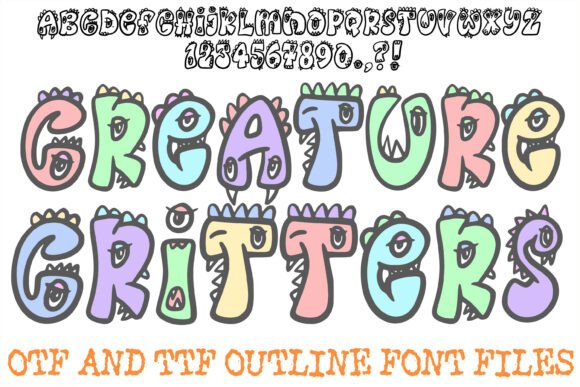
In the landscape of modern design, typography often serves as the silent workhorse, conveying information with efficiency and clarity. However, there are specific project requirements where standard sans-serifs and legible serifs fall short. When a project demands personality, whimsy, or a specific thematic anchor, designers must pivot to display typefaces that carry a heavy narrative burden. The Creature Critters Font is a prime example of such a typeface. It is a monster-themed display font where every character is designed as an individual entity, featuring bold silhouettes, googly eyes, and playful spikes. While it is visually distinct, its value to a professional workflow lies in how effectively it can be deployed to solve specific design challenges without compromising the overall structure of a project.
Understanding the Asset: Anatomy of the Typeface
Before integrating any specialized asset into a workflow, a thorough assessment of its technical and aesthetic properties is necessary. The Creature Critters Font is not merely a set of letters; it is a collection of illustrations. Each character functions as a hand-drawn beast, creating a texture that is dense and visually active. For professionals, this means understanding that this font has a high "visual weight." It commands attention immediately, making it unsuitable for body copy but ideal for high-impact focal points.
From a compatibility standpoint, the font operates like any standard vector-based typeface, meaning it can be scaled to various sizes without losing resolution. However, because the characters feature intricate details—such as fangs and spikes—legibility can become an issue at very small sizes. Therefore, the first step in the planning process is identifying the correct context: large-format headers, logos, or standalone graphical elements where the "beasts" can be fully appreciated.
Strategic Implementation in Project Lifecycles
The utility of a font like Creature Critters Font is best understood through the lens of project phases. It is rarely the typeface used for the initial wireframing of a website or the drafting of a corporate report. Instead, it enters the workflow during the "Theming" or "Visual Identity" phase. This is the stage where a project’s tone is solidified.
Phase 1: Conceptualization and Mood Boarding
When a client or stakeholder requests a design that feels "spooky-cute," "whimsical," or "playful," the Creature Critters Font serves as a strong anchor for a mood board. By setting the project title in this font during the concept stage, designers can immediately communicate the intended aesthetic to the client. This prevents misalignment later in the process. For instance, if the goal is a child’s birthday invitation or a gaming channel logo, presenting the concept with this font helps manage expectations regarding the "seriousness" or "playfulness" of the final deliverable.
Phase 2: Asset Selection and Composition
Once the concept is approved, the font moves into the execution phase. Here, the focus shifts to composition. Because the Creature Critters Font characters are essentially illustrations, they interact with other design elements differently than standard text. A practical workflow tip is to treat these letters as image assets rather than pure typography.
When placing the text, consider the negative space. The "bubbly" nature of the font creates irregular shapes around the letters. Designers should avoid placing these letters too close to rigid geometric shapes or dense patterns, as the visual clash can create clutter. Instead, pair the font with solid color blocks or subtle gradients that allow the "monsters" to stand out.
Specific Use Cases and Application
The versatility of the Creature Critters Font allows it to be applied across various mediums, provided the user understands the context of the medium.
- Digital Branding and Content Creation: For YouTubers or streamers in the gaming or family entertainment niche, this font is invaluable for channel art. It can be used for "Subscribe" overlays or video thumbnails. In this context, the font acts as a branding signature. The workflow involves creating a template in software like Adobe Premiere or After Effects where the font is pre-rendered on an alpha channel, allowing it to be dragged and dropped onto video timelines.
- Event Stationery: For freelancers specializing in print design, the font is a solution for Halloween party invitations or children’s book covers. A key implementation detail here is kerning. Because the characters have unique silhouettes (spikes and eyes), automatic kerning often fails. Manual adjustment is required to ensure the characters look like they are interacting—perhaps a character's tail touching the next character's eye—rather than just floating in isolation.
- Merchandise and Apparel: When designing for print-on-demand services, the Creature Critters Font translates well to t-shirts and stickers. The bold lines ensure that the design holds up on fabric. In this workflow, the text should be converted to outlines (vector paths) before uploading to the print platform. This ensures that the platform does not substitute the font with a default system font if the original file is missing.
Technical Workflow and Quality Control
Integrating a specialized font requires a disciplined approach to file management and quality control.
File Management
Designers should maintain a dedicated library for display fonts. When using the Creature Critters Font, it is wise to keep the original font file (.TTF or .OTF) alongside the project file. If working in a collaborative environment, such as a shared Adobe Creative Cloud library or a Figma team file, ensure the font is embedded or that all team members have access to the license. This prevents the "missing font" error that disrupts workflow continuity.
Color and Contrast
The "googly eyes" and "fangs" are defining features of the font. To maintain these details, high contrast is essential. Using the Creature Critters Font in a light grey on a white background will result in a loss of definition. The optimal workflow involves using dark, saturated colors for the text against a lighter background, or vice versa. If using the font on an image, applying a subtle drop shadow or an outer glow can help separate the text from the background noise, ensuring the creature details remain visible.
Scalability Testing
Before finalizing a design, test the font at the intended output size. A common mistake is designing a logo on a high-resolution monitor where the font looks sharp, only to have it become muddy when printed on a small sticker. The workflow should include a "print test" or a "mobile view" check. If the spikes and eyes merge into a blob at the target size, the designer must simplify the surrounding elements or increase the font size to preserve the integrity of the design.
Long-Term Use and Consistency
For businesses or creators who adopt the Creature Critters Font as part of their brand identity, consistency is key. This font should be reserved for specific elements—such as headers, logos, or call-to-action buttons—to avoid visual fatigue. If every piece of text on a website uses this font, the site becomes difficult to read and the "specialness" of the typeface is diluted.
A practical approach is to pair it with a clean, highly legible sans-serif font for body text. The Creature Critters Font handles the "personality," while the secondary font handles the "information." This hierarchy ensures that the design remains functional while still capturing the whimsical essence of the brand.
Ultimately, the Creature Critters Font is a tool for injecting personality into digital and print media. By treating it as a strategic asset rather than just a decorative option, professionals can leverage its unique hand-drawn aesthetic to create memorable, engaging designs that resonate with audiences ranging from children to nostalgic adults. Its successful implementation relies on a thoughtful workflow that prioritizes context, legibility, and technical preparation.