A Practical Guide to Bakery Shop Font: Is This Vintage Display Typeface Right for Your Project?
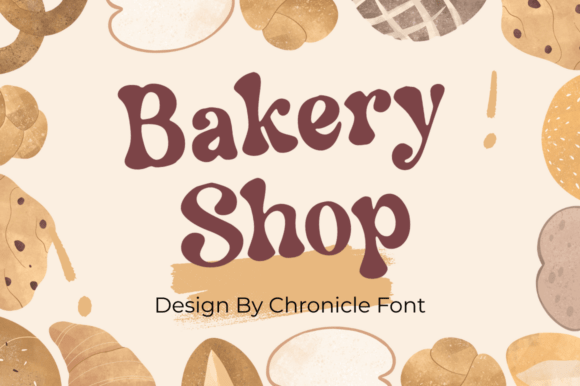
In the vast landscape of digital typography, finding a typeface that balances personality with legibility is a common challenge for designers. The Bakery Shop Font, often associated with the specific style known as Chronicle Note, represents a distinct category of display typography. It is defined by a vintage aesthetic, characterized by bold curves and a whimsical, retro flair. This article serves as an objective guide for designers and creatives evaluating whether this font aligns with their specific branding and design requirements.
Understanding the Aesthetic Profile
At its core, the Bakery Shop Font is a decorative display typeface. It draws inspiration from mid-century signage and hand-lettering styles, resulting in a look that feels nostalgic yet accessible. Unlike geometric sans-serifs or rigid serif fonts, this typeface relies on organic shapes and varying stroke widths to create a sense of movement and friendliness.
The Chronicle Note variation specifically emphasizes a "charming" quality. It is not designed to disappear into the background of a layout; rather, it is intended to command attention. The letterforms often feature exaggerated terminals and rounded edges, which contribute to a playful personality. This makes it distinct from traditional "headline" fonts that prioritize stark boldness over artistic expression.
Evaluating the Use Cases
When considering the Bakery Shop Font, it is essential to match the typeface’s personality with the project's goals. Because of its strong visual identity, it performs best in specific contexts where atmosphere is as important as information.
Where it Fits Strongly
This font style is a strong candidate for projects requiring a warm, human touch. It is particularly effective for:
- Branding for Lifestyle Products: Bakeries, coffee shops, and artisanal food brands often benefit from typography that suggests homemade quality and tradition.
- Event Stationery: Invitations for weddings, parties, or community events can utilize this font to set a casual, celebratory tone.
- Creative Posters and Book Covers: For designs that need to evoke a specific era—such as the 1950s or 1960s—this vintage style provides immediate visual context.
- Digital Headers: In web design, it can be used sparingly for hero text or specific headlines to break the monotony of standard corporate fonts.
Scenarios Requiring Caution
Conversely, there are environments where the Bakery Shop Font may not be the optimal choice. Due to its decorative nature, it is generally unsuitable for:
- Long-form Body Text: The intricate details of the letterforms can cause eye strain when used in small sizes for paragraphs. It is strictly a display font.
- Corporate or Technical Documentation: The whimsical nature of the font may undermine the seriousness or neutrality required for financial reports, legal documents, or technical manuals.
- High-Density Information Design: In infographics or dashboards where clarity is paramount, a cleaner sans-serif is usually preferred.
Practical Considerations for Designers
Before committing to the Bakery Shop Font, designers must evaluate the technical and practical implications of using a vintage display style.
Legibility and Hierarchy
The primary tradeoff with highly stylized fonts is legibility. While the bold curves of Chronicle Note are eye-catching, they can sometimes obscure letter distinction, particularly with capital letters or similar-looking characters (such as 'C' and 'G' or 'I' and 'l'). Designers should test the font at the intended size to ensure the message is readable at a glance.
Furthermore, establishing a clear typographic hierarchy is crucial. Because the Bakery Shop Font has a high "visual weight," it pairs best with neutral, clean typefaces for subheadings and body copy. A common strategy is to use the display font for the main headline and a simple sans-serif (like Helvetica, Roboto, or Open Sans) for the supporting text. This contrast prevents the design from becoming visually cluttered.
File Formats and Licensing
When sourcing the Bakery Shop Font, it is important to verify the licensing terms. Some versions are free for personal use but require a commercial license for business applications. Additionally, check the file formats available. While TTF (TrueType Font) and OTF (OpenType Font) are standard for print and desktop use, web projects may require WOFF or WOFF2 formats for faster loading times.
Making the Decision
Determining if the Bakery Shop Font is the right choice comes down to analyzing the audience and the medium. If the goal is to evoke warmth, nostalgia, and creativity, and the medium allows for large-scale display text, this font is a viable option.
However, if the project requires a modern, minimalist, or strictly utilitarian aesthetic, this font may feel out of place. In such cases, exploring alternatives—such as a geometric sans-serif or a classic serif like Garamond—would be more appropriate.
Ultimately, the Bakery Shop Font is a tool for adding character. It is not a universal solution but a specialized asset. By weighing the need for personality against the requirement for neutrality, designers can make an informed choice that enhances the visual impact of their work without compromising functionality.